Showing posts with label Loch Sween. Show all posts

Monday, 18 June 2012

Seafield Farmhouse - Available for Holidays

A year ago while on holiday in our campervan on a storm bound Hebridean island we thought about how little space we needed and decided to spend the winter preparing to move out of our house so that we could let it during the summer months. With all the children having flown the nest, it is a large space for two of us and we are rarely indoors during the summer. We arrived home to the discovery that we had a double booking and so some very understanding visitors were the first to sample staying in Seafield Farmhouse after our rather hasty preparations.


A year on and the house is almost prepared for public consumption. We were nearly ready when our visitors in Byre Cottage needed to extend their stay for a fortnight and it is amazing what you can achieve with two day's notice. Needless to say, the winter had been spent on the sofa, close to the woodburner rather than performing admirable feats of de-cluttering. Letting Seafield Farmhouse is not a new concept. Granny and Grandpa Livingston sent the children to relatives in the summer so that the house could be let to families who came up for six weeks at a time. We have a copy of a delightful diary kept by the daughter of one such family who stayed here in 1928 for whom Granny cooked 'monstrously good suppers'. In the 21st century, the accommodation will be strictly self catering!


We are not sure of the exact age of the house. It has been described as 150 years old for at least the last 40 years. It was built as part of the Poltalloch Estate and sold to the Forestry Commission in the 1930's. Grandpa Neil Livingston arrived from the Isle of Luing at the beginning of the last century when Seafield was a sheep farm. The Forestry Commission planted the hill with sitka spruce and Seafield became a sixty acre smallholding comprising mainly of rock and bog. His son Jimmy Livingston took over the farm and also worked full time for the Forestry, operating a winch. In time, his son, my husband, James Livingston came home to look after the place and was also employed by the Forestry Commission. As a tenant, James was able to buy Seafield in the late 1980's and could then diversify into holiday lets, sawmilling and firewood processing. He has recently taken early retirement and so we hope to be able to continue to improve the facilties we provide so that many more people can share the stunning place we are fortunate to be able to live in. That's when James isn't fishing of course.


On the ground floor, the house has a large, 30 ft long conservatory which we added in 1997. This is the main living and dining area and has a woodburning stove. Off the conservatory is a large kitchen with units made by a local craftsman with reclaimed timbers from redundant Crinan Canal lock gates. It has a dishwasher and dual fuel cooker with gas hob and electric oven. There is a combination microwave and large fridge plus the usual small appliances.


Off the kitchen is a utility room with washer and freezer which is accessible from the kitchen but also has a separate exterior door. We need access to this space from time to time as it houses our freezer and a large oven which I need to use occasionally - but we will be as unobtrusive as possible.


The hallway which has a small cloakroom, leads to a family suite of double bedroom with adjacent twin bedroom and ensuite facilities.


Upstairs, there is a large double bedroom with king sized bed and a bathroom with bath and shower. The second bedroom is not available for letting as it is in need of complete refurbishment and will be used for storage of all the things we don't know what to do with.


Central Heating and hot water are from the log fired boiler and there is a woodburner in the conservatory. During warmer weather, the boiler is off and heating and hot water are provided by electricity - mostly generated by the photo voltaic panels.


Seafield Farmhouse is available for holidays during June, July and August. We may extend into September if all goes well. Sorry, no pets and no smoking. Children are welcome. With Byre and Stable Cottages just next door, there is plenty of scope for larger family groups who want to spend time together while enjoying their own space.

To check availability, please go to www.seafieldfarmcottages.co.uk and check the search availability button, email info@seafieldfarmcottages.co.uk or phone 01546 850274


Tuesday, 12 October 2010

Autumn in Argyll

We have enjoyed a very fine Autumn here on the West Coast. Temperatures have been higher than usual, apart from two nights of frost at the end of September and the occasional rainy mornings gave way to glorious afternoons and evenings. Swimming on Loch Sween has extended into October. The wet suit has been hung up for the last time on several occasions, only to be taken out again for 'one last swim until next year'.


After a spring and summer of hobbling around with an injured knee, James finally managed to get up to his favourite fishing spot. The Wolf Loch above Achnamara sounds impressive and dramatic but the one time I made it up to the top of the Cruach which involves sprachling over rough terrain and climbing over a deer fence, I was surprised to see this much lauded loch was a small and weedy body of water. However, it's modest size and difficulty of access is compensated for by the fantastic trout that it holds.


The four chicks raised earlier in the year all turned out to be cockerels, or dinner as I like to call them. The new hen house was finally finished and all the hens, with their new cockerel are now installed in a very substantial and hopefully, predator proof, house. It has an automatically opening and closing pophole so next summer, we hope to be able to enjoy nights away while the chickens put themselves to bed.


The Moine Mhor north of the Crinan Canal, is the remnant of an ancient raised bog which is managed by Scottish Natural Heritage. It is a fantastic place for wildlife and you can spot hen harriers and short eared owls. Earlier in the year we had a close encounter with five short eared owl chicks which chose to sit in the middle of the road. Take a turn to Crinan Ferry which has a good beach and on the way enjoy views to Duntrune Castle, home to the Malcolms of Poltalloch.


The garden has been very productive this summer with great crops from most plantings. The only disappointments have been the onions and the celeriac – unless they are supposed to be golf ball size?


We haven't managed to get away for a holiday this autumn but the great weather has made up for it. A favourite outing is to take the camper van down to the point of Knap, have a walk and then enjoy a cup of tea and some cake while enjoying the views across to Jura. Simple pleasures! The landscape opens up as you drive down the peninsula, the hills are kept bare by sheep and deer so it is a totally different experience from being here at the head of the loch, surrounded by trees. A notable landmark is Castle Sween which is one of the oldest Castles in Scotland.


The Autumn Stag Rut has been in full swing with deer bellowing all around Achnamara. I don't remember them being so noisy in the past and it has been unusual for them to be in the fields around the house and village rather than further up in the hills.


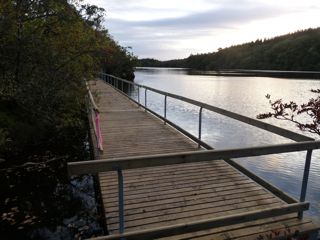
Yet more beavers have been added to the Beaver Trial. At the last count there were twelve beavers in the trial area which is one more than the trial started with eighteen months ago. The Dubh Loch family produced one kit this year, as did the family on Loch Linne. A new pair were imported from Norway and released onto Creag Mhor Loch but then moved to an adjacent, less accessible unnamed loch. Another male beaver was released to join the lone female on Seafield Loch in an attempt to make a fourth potential breeding pair. We don't know yet if this has been successful. The Dubh Loch beavers have been extending their dam and increasing the area of flooding. Unfortunately this has now extended beyond the entrance to the new path installed to bypass the flooded 'Beaver Detective Trail'. A very impressive looking pontoon on Coille Bharr will take walkers onto the loch, just below the beaver dam. It is not yet accessible but will hopefully be completed before too long.


Monday, 23 August 2010

July and August


July was a fairly dreary month but things improved in August with sunnier if shorter days. We escaped in July for a week's holiday in Norfolk which unlike Argyll was parched and golden. When the temperature threatened to rise to 29C, we headed west to visit son John and his girlfriend Zoe in their lovely new home.

On our first day home, we were booked on an evening boat trip to Eilean Mor organised by the Dalriada Project and led by Dr Sharon Webb of Kilmartin House Museum. We travelled from Tayvallich, down Loch Sween, past Castle Sween with Venture West (venture-west.co.uk) on an astonishingly beautiful evening. The island has a ruined chapel and a tiny visitor centre with information about the island. The Dalriada Project is now coming to an end and there were events to celebrate the achievements of the project.

August is the time of abundance in the garden and the wild. The garden has produced far more than we need but we have been helped by slugs eating the cauliflowers caterpillars munching the cabbage and mice harvesting the peas. Such are the joys of organic-ish gardening. We have been gathering wild chanterelles and ceps and our shiitake logs have produced well. The tomatoes have been fantastic and look like cropping for some time to come. Four very nice trout were caught on the Leipeg Loch but the mackerel fishing on Loch Sween has been a little disappointing - probably because we haven't taken the boat out and only fished from the shore.

An interesting looking moth caterpillar, a Vapourer, appeared on a dogwood leaf and the butterflies have been amazing. There were about 30 peacock butterflies on one buddleia bush and they were also sunning themselves on the summerhouse verandah. A silver washed fritillary was seen one morning and there were many speckled woods, red admiral, small coppers, scotch argus, orange tips and tortoishells.

Artmap Argyll, (artmapargyll.com) the open studios event happened in August and my workshop was open to the public for four days. Many of the artists can be visited by appointment outside the open studio event so it is worth picking up a brochure or visiting the website and exploring the wealth of creative activity in the area. An associated exhibition at Kilmartin House Museum, 'Mixing up the Media' continues until the end of September.

The beavers continue to munch their way through Knapdale. The two families on Dubh Loch and Loch Linne have each produced one kit so the current count stands at 11 - the same number as were released in May 2009 and four less than the total beavers released. The two beavers released on Creag Mhor Loch at the end of June have relocated to an unnamed lochan between Creag Mhor and Loch Linne. Creag Mhor Loch was the release site of one of the original families which dispersed in the first weeks of the trial. Perhaps we can now assume that there is something about the loch which is inherently unsuitable for beavers rather than any suggestion that they were shot at? The single female which relocated to Seafield Loch after its partner died is still there. The project now has permission to replace dead or dispersed adult beavers up until May 2011 and having dispensed with the need for quarantine can continue to bolster the project rather than letting it run its course.

Tuesday, 11 May 2010

Ne'er cast a clout til May is Out


Whether the saying refers to the hawthorn blossom or the month, I don’t think I will be casting any clouts for a while yet. May so far has been beautifully clear and sunny but the cold air which gives us the clarity means warm woolly jumpers and sunburned noses.

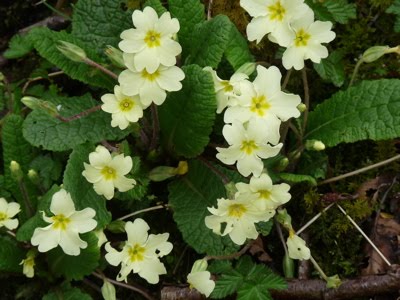
The ground has been remarkably dry, making gardening a pleasure but with sub zero nightime temperatures and hot sunny afternoons, the new growth is being frosted and burnt at the same time. The tomatoes have long outgrown their pots but will have to wait on the windowsill a little longer before transfer to the polytunnel. The wild spring flowers are a delight, with violets, primroses, bluebells and blackthorn blossom all making wonderful displays - unlike their tender cultivated counterparts, the varying temperatures seem to have little effect on them.

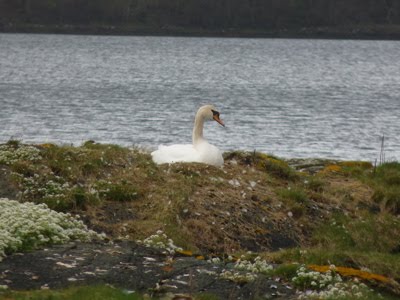
A blackbird built a nest in the rock face behind my workshop so I was distracted from basketmaking by the much more absorbing task of trying to capture a photo of the adult feeding the chicks. We also have swallows and wagtails nesting in the eaves. Our resident pair of mute swans managed to raise a cygnet last year after a few years of choosing remarkably poor nesting sites which were always washed away by a high tide. After success last year, they have returned to the better site and are sitting on eggs.

A fishing trip to Loch Linne gave James his first catch of the year - one pan sized brown trout. Many more were caught but were far too small to keep. The loch is quite low because there has been so little rain over the last months. It is a beautiful spot, no distance from the road but surrounded by forest and utterly peaceful.

On a clear day, the views from above Crinan are wonderful and we could see porpoises breaking the surface far below us. You can look out to the islands of Islay, Jura, Scarba, Luing and Mull. Cruachan still had patches of snow showing up in the sunshine. The west coast of Scotland has some of the best sailing you can find and there were a few boats out in the Sound of Jura.

Along the forest road towards Carsaig we came across an art installation which was part of the NVA Environmental Art Project which took place in the area in 2007. We had visited some of the installations but hadn’t been to this one so it came as a surprise to find a timber walkway in an avenue of standing spruce columns leading to a woven archway which frames a rock outcrop with ancient rock carvings.

We incubated four chicks from some Maran eggs given to me by a friend. We don’t know yet which are cockerels and which will be hens but they are currently looking fairly macho and slightly scruffy with new feathers coming in to replace the down. I fear they may all end up in the pot rather than joining our team of egg layers.

No Seafield blog post is complete without mention of the beavers and a slightly blurry photo of the new arrivals. Two more beavers were released this month bringing the total population up to 8, three breeding pairs and two juveniles. They can be seen quite easily as the Lily Loch is small and having been in the Highland Wildlife Park for a year, they will be used to a degree of human contact. According to an article in the Herald Magazine, the budget is now £2.5 million which seems an astonishing amount of money for a project to give Argyll more wetland. It may have been dry this year but one thing Argyll is not short of is wetland. £2.5 million would build a fantastic visitor centre to celebrate and interpret Argyll’s amazing native wildlife and beautiful historic landscape and be far more beneficial for visitors to the area than a few large rodents which have flooded a popular forest walk.

Thursday, 24 December 2009

Winter Wonderland at Seafield


Visitors often ask if there will be lots of snow at Christmas and usually my answer is ‘probably not’. Typical Argyll festive seasons have been wet, windy, mild and green but this year has proved the exception and we have a covering of snow and thick frost. It is stunningly beautiful and the monochrome snowy scenes of the day have given way to stunningly colourful sunsets. The one year that we could have provided the perfect Scottish white Christmas for our visitors, we decided to have a break and leave the cottages empty until New Year.

The weather is not without it’s challenges, with frozen water supplies and icy roads to contend with. Bundles of willow which should have been baskets by now are frozen in the soaking tank and will take days to thaw when the temperatures rise. Fortunately we have plenty of firewood to keep us warm and cosy in the house.

We continue to keep an eye on the beavers. Both families have built lodges and stored winter supplies of food underwater. Coming from Norway, the cold weather will not cause a problem for them. The tree felling activity has increased in recent months and hundreds of trees have now been felled and many will die through being flooded. While this may create habitats for some flora and fauna, it will undoubtedly displace others. If the damage to the woodland had been caused by humans, it would be called vandalism; because it is done by a wild creature, it is considered beneficial. With a landscape covered in Sitka Spruce, it is nonsense to laud the environmental benefits of opening up the canopy in tiny areas of scrubby woodland.

We wish all our visitors a happy and peaceful Christmas and New Year.