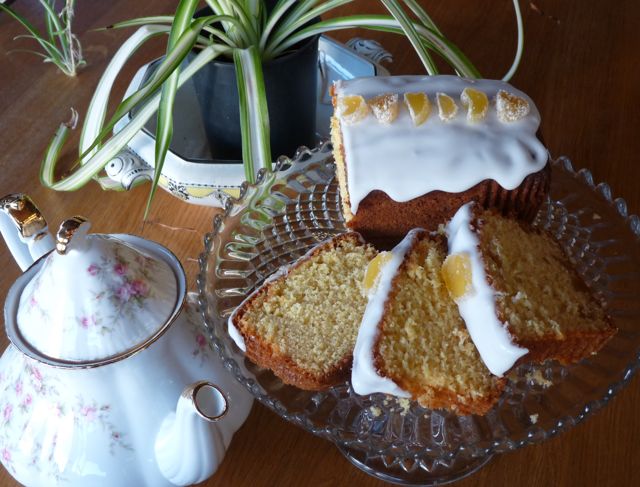
Last Tuesday was Pancake Day otherwise known as Shrove Tuesday when we are supposed to eat pancakes in preparation for the Lent fast. Whether you observe such traditions or not, any excuse to eat pancakes of any variety is always welcome.
I learned to make pancakes from my grandmother and my Mum - scotch pancakes and potato scones always seemed to be made at the same time and leftovers fried up for breakfast with egg and bacon. There is something really delicious about the sweetness of the pancake with the saltiness of the bacon.
After making pancakes this year, I received a request for the recipe so here it is. My grandmother worked in spoonsful, pinches and handsful - some of her recipes don't even have that amount of detail but I have worked out the recipe in grams for the modern cook. She used a griddle on the stove but I recently acquired a fantastic crepe pan with non stick surface and thermostatic control from Lidl which takes the guess work out of getting the temperature just right.
Makes about 25 Pancakes
250g plain flour
40g caster sugar
1 level teaspoon bicarbonate of soda
1 heaped teaspoon cream of tartar
pinch of salt
20g melted butter
30g (a dessertspoon) of golden syrup
I large egg
300 ml milk
Sieve the dry ingredients into a bowl. Whisk the egg and milk together in a jug and add the butter and golden syrup. Make a well in the centre of the dry ingredients and add the liquid gradually, stirring in the flour until you have a thick batter.
Heat a griddle, thick bottomed or electric frying pan, or an electric crepe maker. Oil the surface lightly and drop spoonsful from the point of the spoon onto the hot surface.
Do a test pancake first to check the temperature. If it is correct, the pancakes should cook in about one and a half minutes per side. The pancake is ready for turning when the bubbles rise to the surface and start to burst. Flip it over and cook the second side for the same time.
Cool the pancakes on a cooling tray with a clean tea towel above and below.
Serve with butter and homemade jam, golden syrup, honey or whatever you like. Enjoy.
Friday, 7 March 2014
Thursday, 7 November 2013
Beekeeping at Seafield - Again
In 2009 I wrote about our first foray into beekeeping or rather, bee watching. The winter of 2009/10 proved to be exceptionally cold and when it became warm enough to inspect the hives, we discovered that the two colonies had not made it through to the spring. We hadn't really learned much about beekeeping so had no idea why they perished or what we could have done about it. We were not totally put off but getting new bees didn't seem to be easy.
In 2012 we had the opportunity of buying a nucleus of bees from a friend who lives nearby. We spent a fortune on the accoutrements of beekeeping - a couple of hives, another suit, smokers, frames, foundation - the list goes on.
We collected the bees - five frames of worker bees, stores, brood and a queen bee and transported them to their new apiary - in a sunny spot well away from the house and cottages. A fence was constructed to keep badgers and deer away from the hives although we hadn't thought about the pine marten which shredded the insulation under the hives in its attempt to get at the bees and their honey.
We headed off to Colonsay to attend a weekend course with Andrew Abrahams, a hugely knowledgeable beekeeper and champion of the native black bees. A huge amount of information was on hand, we may even have manage to absorb some of it.
Within a few days of our return we faced our first challenge - our bees had swarmed. Our inexperience meant we had failed to give the bees enough room and hadn't noticed the formation of queen cells, a certain sign of the preparation to swarm. The swarm was captured and placed in a new hive but again our inexperience showed and a failure to place a queen excluder on the bottom of the hive, allowed the colony to continue its determined mission to find a new home. If we had kept the queen captive, the colony would not have left.
A friend came and removed frames with queen cells to another hive, leaving another two frames with queen cells in the original hive. This seemed drastic with depleted numbers but it did the trick. Another small swarm appeared which we manage to catch - this time keeping them captive. We reduced the queen cells to one in each hive and waited. And waited. And waited. After a period of time determined by several bee books, we inspected the hives to find no sign of queens or eggs or brood. Despondency. So we waited some more and amazingly discovered that we had three queens, all mated and all producing new bees. Elation. It was fortunate that our bees knew what they were doing and our ignorance wasn't a problem for them. A yellow dot was applied to identify her as a 2012 queen.
This is the point at which we might have expected to be harvesting the fruits of our bees' labours. The long queenless gap and the slow build up of the colonies meant that not a drop of honey was to be seen apart from the meagre stores we left them with.
Our previous winter experience was a cause for anxiety as we headed into the colder months. We fed them, put in insulated dummy boards and carpet in the roof and crossed our fingers. The winter wasn't particularly cold but the spring was a long time coming so we were not able to inspect our bees properly until nearly the end of April. Our smallest colony had perished. Two and a half frames of bees was marginal for getting through the winter but we couldn't bring ourselves to kill one of our queens and amalgamate the two smaller colonies. Fortunately our two stronger (but still quite small) colonies made it and spent the summer building up their numbers and building wax comb for egg laying and honey and pollen storage.
A course in Moray with Tony Harris on queen rearing, gave us confidence to have a go at producing new queens using 'mini nucs' - tiny polytyrene hives which by some magic, produce mated, laying queens far more quickly than in a conventional hive. We persuaded the bees to produce new queen cells by doing an 'arificial swarm' removing the queen and flying bees to another hive, leaving the workers queenless and ready to raise new queens. The queen cells when nearly ready to emerge were put into the mini nucs with a couple of cups full of bees. We also left a queen cell in the hive so had three chances of new queens. In the event, only one queen was produced in one of the mini nucs. The second queen cell was 'torn down' by the workers and we don't know what happened to the one in the hive. We tried again later to persuade the bees to produce queen cells but it wasn't successful - maybe it was too late in the season.
Now here we are going into winter again. This time with three colonies of similar size, one lovely new queen and two queens which have now done two seasons so will need to be replaced in 2014. They have been fed with sugar syrup, wrapped up warmly and left with good quantities of honey. There are no signs of varroa or other disease (although it is by no means certain that we would spot them all). Slabs of Ambrosia fondant have been put in the hives and we have constructed wooden hive cosies to give them some additional protection from the rain, wind and cold.
They are still flying on good days, adding ivy pollen and nectar to the stores. And best of all, we were able to harvest some of the precious liquid gold - 20 jars of honey which must have cost about £100 each.
The fingers are once again firmly crossed for their winter survival. We may not be about to get rich from honey production but we have learned a lot and just hope that we get a chance to benefit from our experience in 2014. Thanks bees for all the lessons, the honey, and the entertainment and for a whole new way of gardening and observing. See you next year.
In 2012 we had the opportunity of buying a nucleus of bees from a friend who lives nearby. We spent a fortune on the accoutrements of beekeeping - a couple of hives, another suit, smokers, frames, foundation - the list goes on.
We collected the bees - five frames of worker bees, stores, brood and a queen bee and transported them to their new apiary - in a sunny spot well away from the house and cottages. A fence was constructed to keep badgers and deer away from the hives although we hadn't thought about the pine marten which shredded the insulation under the hives in its attempt to get at the bees and their honey.
We headed off to Colonsay to attend a weekend course with Andrew Abrahams, a hugely knowledgeable beekeeper and champion of the native black bees. A huge amount of information was on hand, we may even have manage to absorb some of it.
Within a few days of our return we faced our first challenge - our bees had swarmed. Our inexperience meant we had failed to give the bees enough room and hadn't noticed the formation of queen cells, a certain sign of the preparation to swarm. The swarm was captured and placed in a new hive but again our inexperience showed and a failure to place a queen excluder on the bottom of the hive, allowed the colony to continue its determined mission to find a new home. If we had kept the queen captive, the colony would not have left.
A friend came and removed frames with queen cells to another hive, leaving another two frames with queen cells in the original hive. This seemed drastic with depleted numbers but it did the trick. Another small swarm appeared which we manage to catch - this time keeping them captive. We reduced the queen cells to one in each hive and waited. And waited. And waited. After a period of time determined by several bee books, we inspected the hives to find no sign of queens or eggs or brood. Despondency. So we waited some more and amazingly discovered that we had three queens, all mated and all producing new bees. Elation. It was fortunate that our bees knew what they were doing and our ignorance wasn't a problem for them. A yellow dot was applied to identify her as a 2012 queen.
This is the point at which we might have expected to be harvesting the fruits of our bees' labours. The long queenless gap and the slow build up of the colonies meant that not a drop of honey was to be seen apart from the meagre stores we left them with.
Our previous winter experience was a cause for anxiety as we headed into the colder months. We fed them, put in insulated dummy boards and carpet in the roof and crossed our fingers. The winter wasn't particularly cold but the spring was a long time coming so we were not able to inspect our bees properly until nearly the end of April. Our smallest colony had perished. Two and a half frames of bees was marginal for getting through the winter but we couldn't bring ourselves to kill one of our queens and amalgamate the two smaller colonies. Fortunately our two stronger (but still quite small) colonies made it and spent the summer building up their numbers and building wax comb for egg laying and honey and pollen storage.
A course in Moray with Tony Harris on queen rearing, gave us confidence to have a go at producing new queens using 'mini nucs' - tiny polytyrene hives which by some magic, produce mated, laying queens far more quickly than in a conventional hive. We persuaded the bees to produce new queen cells by doing an 'arificial swarm' removing the queen and flying bees to another hive, leaving the workers queenless and ready to raise new queens. The queen cells when nearly ready to emerge were put into the mini nucs with a couple of cups full of bees. We also left a queen cell in the hive so had three chances of new queens. In the event, only one queen was produced in one of the mini nucs. The second queen cell was 'torn down' by the workers and we don't know what happened to the one in the hive. We tried again later to persuade the bees to produce queen cells but it wasn't successful - maybe it was too late in the season.
Now here we are going into winter again. This time with three colonies of similar size, one lovely new queen and two queens which have now done two seasons so will need to be replaced in 2014. They have been fed with sugar syrup, wrapped up warmly and left with good quantities of honey. There are no signs of varroa or other disease (although it is by no means certain that we would spot them all). Slabs of Ambrosia fondant have been put in the hives and we have constructed wooden hive cosies to give them some additional protection from the rain, wind and cold.
They are still flying on good days, adding ivy pollen and nectar to the stores. And best of all, we were able to harvest some of the precious liquid gold - 20 jars of honey which must have cost about £100 each.
The fingers are once again firmly crossed for their winter survival. We may not be about to get rich from honey production but we have learned a lot and just hope that we get a chance to benefit from our experience in 2014. Thanks bees for all the lessons, the honey, and the entertainment and for a whole new way of gardening and observing. See you next year.
Wednesday, 6 November 2013
Seafield Farm Cottages are back Online
Friday, 13 September 2013
Website Woes
Much as I enjoy making things, growing things and generally being as independent as possible, there are some things I choose not to do myself, preferring to employ someone who is competent in whatever area I find myself hopelessly inept. Web Design is one such area so when I finally realised that a web site was necessary to showcase our holiday cottages, I cast around for recommendations for web site designers and hosts. A host was found, a site designed and as far as I knew (we only communicated by email) a working relationship was established, fees paid and service was rendered.
Four years on, in the middle of a busy season, an email arrives. 'I am closing my business, you can't have your hosting fees back and if you want your domain name and website, you'll have to pay me for it'. What?!? I thought I had paid for it? Silly me. I am happy to pay for a job well done, but only once. Not twice. A charge would be understandable if I was choosing to change providers but this was a unilateral declaration of termination.
All this is a long winded way of letting you know that we are still here but if you try to access the website at the moment you will get the message 'Directory Listing Denied
This Virtual Directory does not allow contents to be listed'.
A new website should be available soon. Until then, you can find us at www.scotland2000.com/seafield, on Facebook at Seafield Farm Cottages and Craft and on Twitter at seafieldfarm. You can email seafield3@btinternet.com
Four years on, in the middle of a busy season, an email arrives. 'I am closing my business, you can't have your hosting fees back and if you want your domain name and website, you'll have to pay me for it'. What?!? I thought I had paid for it? Silly me. I am happy to pay for a job well done, but only once. Not twice. A charge would be understandable if I was choosing to change providers but this was a unilateral declaration of termination.
All this is a long winded way of letting you know that we are still here but if you try to access the website at the moment you will get the message 'Directory Listing Denied
This Virtual Directory does not allow contents to be listed'.
A new website should be available soon. Until then, you can find us at www.scotland2000.com/seafield, on Facebook at Seafield Farm Cottages and Craft and on Twitter at seafieldfarm. You can email seafield3@btinternet.com
Friday, 7 December 2012
Preserved Ginger Cake
This cake has gone down well at recent village hall and basketmaking events and with our vistors to the holiday cottages. It's a cut above the usual gingerbread and very easy to make.
Makes 3 loaf cakes (1lb size)
450 gm Self Raising Flour
50 gm Ground Almonds (optional - you can substitute with flour)
6 large Eggs
325 gm Sugar - white or soft brown
325 gm Butter or Soft Margarine
2 tablespoons Golden Syrup (or syrup from jar of preserved ginger)
4 teaspoons Ground Ginger
175 gm Preserved or Crystallized Ginger, chopped
Icing (Optional)
250 gm icing sugar
lemon juice
Put flour, ground almonds (or flour), eggs, sugar, butter/margarine, syrup, ground ginger into the mixing bowl. Beat all together until well mixed. Add milk if required to make a soft dropping consistency. Add chopped ginger, keeping some aside for decoration. Divide mixture between 3 loaf tins or 2 x 23 cm round tins. Greaseproof cake tin liners make tin lining easy.
Bake in fan oven 160C for 45 - 50 minutes. Adjust temperature if you have a different type of oven.
Make icing and coat the top of the cakes when cool. Add ginger for decoration.
This cake has gone down well at recent village hall and basketmaking events and with our vistors to the holiday cottages. It's a cut above the usual gingerbread and very easy to make.
Makes 3 loaf cakes (1lb size)
450 gm Self Raising Flour
50 gm Ground Almonds (optional - you can substitute with flour)
6 large Eggs
325 gm Sugar - white or soft brown
325 gm Butter or Soft Margarine
2 tablespoons Golden Syrup (or syrup from jar of preserved ginger)
4 teaspoons Ground Ginger
175 gm Preserved or Crystallized Ginger, chopped
Icing (Optional)
250 gm icing sugar
lemon juice
Put flour, ground almonds (or flour), eggs, sugar, butter/margarine, syrup, ground ginger into the mixing bowl. Beat all together until well mixed. Add milk if required to make a soft dropping consistency. Add chopped ginger, keeping some aside for decoration. Divide mixture between 3 loaf tins or 2 x 23 cm round tins. Greaseproof cake tin liners make tin lining easy.
Bake in fan oven 160C for 45 - 50 minutes. Adjust temperature if you have a different type of oven.
Make icing and coat the top of the cakes when cool. Add ginger for decoration.
Monday, 18 June 2012
Seafield Farmhouse - Available for Holidays
A year ago while on holiday in our campervan on a storm bound Hebridean island we thought about how little space we needed and decided to spend the winter preparing to move out of our house so that we could let it during the summer months. With all the children having flown the nest, it is a large space for two of us and we are rarely indoors during the summer. We arrived home to the discovery that we had a double booking and so some very understanding visitors were the first to sample staying in Seafield Farmhouse after our rather hasty preparations.

A year on and the house is almost prepared for public consumption. We were nearly ready when our visitors in Byre Cottage needed to extend their stay for a fortnight and it is amazing what you can achieve with two day's notice. Needless to say, the winter had been spent on the sofa, close to the woodburner rather than performing admirable feats of de-cluttering. Letting Seafield Farmhouse is not a new concept. Granny and Grandpa Livingston sent the children to relatives in the summer so that the house could be let to families who came up for six weeks at a time. We have a copy of a delightful diary kept by the daughter of one such family who stayed here in 1928 for whom Granny cooked 'monstrously good suppers'. In the 21st century, the accommodation will be strictly self catering!

We are not sure of the exact age of the house. It has been described as 150 years old for at least the last 40 years. It was built as part of the Poltalloch Estate and sold to the Forestry Commission in the 1930's. Grandpa Neil Livingston arrived from the Isle of Luing at the beginning of the last century when Seafield was a sheep farm. The Forestry Commission planted the hill with sitka spruce and Seafield became a sixty acre smallholding comprising mainly of rock and bog. His son Jimmy Livingston took over the farm and also worked full time for the Forestry, operating a winch. In time, his son, my husband, James Livingston came home to look after the place and was also employed by the Forestry Commission. As a tenant, James was able to buy Seafield in the late 1980's and could then diversify into holiday lets, sawmilling and firewood processing. He has recently taken early retirement and so we hope to be able to continue to improve the facilties we provide so that many more people can share the stunning place we are fortunate to be able to live in. That's when James isn't fishing of course.

On the ground floor, the house has a large, 30 ft long conservatory which we added in 1997. This is the main living and dining area and has a woodburning stove. Off the conservatory is a large kitchen with units made by a local craftsman with reclaimed timbers from redundant Crinan Canal lock gates. It has a dishwasher and dual fuel cooker with gas hob and electric oven. There is a combination microwave and large fridge plus the usual small appliances.

Off the kitchen is a utility room with washer and freezer which is accessible from the kitchen but also has a separate exterior door. We need access to this space from time to time as it houses our freezer and a large oven which I need to use occasionally - but we will be as unobtrusive as possible.

The hallway which has a small cloakroom, leads to a family suite of double bedroom with adjacent twin bedroom and ensuite facilities.

Upstairs, there is a large double bedroom with king sized bed and a bathroom with bath and shower. The second bedroom is not available for letting as it is in need of complete refurbishment and will be used for storage of all the things we don't know what to do with.

Central Heating and hot water are from the log fired boiler and there is a woodburner in the conservatory. During warmer weather, the boiler is off and heating and hot water are provided by electricity - mostly generated by the photo voltaic panels.

Seafield Farmhouse is available for holidays during June, July and August. We may extend into September if all goes well. Sorry, no pets and no smoking. Children are welcome. With Byre and Stable Cottages just next door, there is plenty of scope for larger family groups who want to spend time together while enjoying their own space.
To check availability, please go to www.seafieldfarmcottages.co.uk and check the search availability button, email info@seafieldfarmcottages.co.uk or phone 01546 850274

A year on and the house is almost prepared for public consumption. We were nearly ready when our visitors in Byre Cottage needed to extend their stay for a fortnight and it is amazing what you can achieve with two day's notice. Needless to say, the winter had been spent on the sofa, close to the woodburner rather than performing admirable feats of de-cluttering. Letting Seafield Farmhouse is not a new concept. Granny and Grandpa Livingston sent the children to relatives in the summer so that the house could be let to families who came up for six weeks at a time. We have a copy of a delightful diary kept by the daughter of one such family who stayed here in 1928 for whom Granny cooked 'monstrously good suppers'. In the 21st century, the accommodation will be strictly self catering!

We are not sure of the exact age of the house. It has been described as 150 years old for at least the last 40 years. It was built as part of the Poltalloch Estate and sold to the Forestry Commission in the 1930's. Grandpa Neil Livingston arrived from the Isle of Luing at the beginning of the last century when Seafield was a sheep farm. The Forestry Commission planted the hill with sitka spruce and Seafield became a sixty acre smallholding comprising mainly of rock and bog. His son Jimmy Livingston took over the farm and also worked full time for the Forestry, operating a winch. In time, his son, my husband, James Livingston came home to look after the place and was also employed by the Forestry Commission. As a tenant, James was able to buy Seafield in the late 1980's and could then diversify into holiday lets, sawmilling and firewood processing. He has recently taken early retirement and so we hope to be able to continue to improve the facilties we provide so that many more people can share the stunning place we are fortunate to be able to live in. That's when James isn't fishing of course.

On the ground floor, the house has a large, 30 ft long conservatory which we added in 1997. This is the main living and dining area and has a woodburning stove. Off the conservatory is a large kitchen with units made by a local craftsman with reclaimed timbers from redundant Crinan Canal lock gates. It has a dishwasher and dual fuel cooker with gas hob and electric oven. There is a combination microwave and large fridge plus the usual small appliances.

Off the kitchen is a utility room with washer and freezer which is accessible from the kitchen but also has a separate exterior door. We need access to this space from time to time as it houses our freezer and a large oven which I need to use occasionally - but we will be as unobtrusive as possible.

The hallway which has a small cloakroom, leads to a family suite of double bedroom with adjacent twin bedroom and ensuite facilities.

Upstairs, there is a large double bedroom with king sized bed and a bathroom with bath and shower. The second bedroom is not available for letting as it is in need of complete refurbishment and will be used for storage of all the things we don't know what to do with.

Central Heating and hot water are from the log fired boiler and there is a woodburner in the conservatory. During warmer weather, the boiler is off and heating and hot water are provided by electricity - mostly generated by the photo voltaic panels.

Seafield Farmhouse is available for holidays during June, July and August. We may extend into September if all goes well. Sorry, no pets and no smoking. Children are welcome. With Byre and Stable Cottages just next door, there is plenty of scope for larger family groups who want to spend time together while enjoying their own space.
To check availability, please go to www.seafieldfarmcottages.co.uk and check the search availability button, email info@seafieldfarmcottages.co.uk or phone 01546 850274
Labels:
Achnamara,
Baskets,
beavers,
Castle Sween,
Holiday Cottages,
Kilmartin House Museum,
Knapdale,
Loch Sween,
Ospreys,
Photo Voltaics,
Seafield Farm Cottages,
Trout,
wi-fi,
Woodburning Stove
Tuesday, 28 February 2012
Twittering and Beavering Away at Seafield
On my recent travels through Twitter, I came across freetobook, a free application which can be added to blogs, tweets, facebook posts and web sites to mention but a few. I have avoided such things in the past partly because of a fear of the double booking and loss of control but mainly because it all seemed too mind boggling for a simple country woman but after a couple of late nights and head scratching, I think I have it up and running. See the green search button at the bottom of this page.
This year, bookings are noticeably slower than in previous years and with the financial situation in the country, it is hardly surprising that holidays are not top of everyone's priorities in 2012. It also has to be said that summer of 2011 was less than glorious - we know - we spent a week in our campervan in a howling gale and torrential rain at the beginning of June.
Midsummer is usually the best time to visit the west coast with long, light days and less than average rain. A fortnight, rain bound in a cottage (no matter how comfortable) would not encourage me to return to this part of the world and I would probably be poring over brochures and websites promising sunshine and heat. My personal recommendation would be for April - statistically our driest month, the evenings are getting longer and the midges haven't arrived.
I can't promise the weather will be any better this year but if hoping would do it, we would be in for a glorious summer. All I can promise is a comfortable cottage with all mod cons and lots of traditional charm in a beautiful spot at the head of Loch Sween. There will be home baked cake to welcome you and lots of glossy magazines and interesting books to while away an hour or two. Kirkland has joined our other cottages in having free wi-fi - and in a small wooden building there is no problem with the signal! Don't worry if you are desperate to get away from the tyranny of the internet and 24/7 connectivity - I can easily remove the hub so you won't be tempted.
Let us not be pessimistic and remember that this part of the world is astonishingly beautiful with stunning land and seascapes, an abundance of wildlife, fantastic walks and trails through the forest and a wonderful historical and archaeological heritage.
Give it a try. If all else fails, Archie at Fyne Tackle has an excellent range of wet weather gear! And of course there are always the beavers . . . .
This year, bookings are noticeably slower than in previous years and with the financial situation in the country, it is hardly surprising that holidays are not top of everyone's priorities in 2012. It also has to be said that summer of 2011 was less than glorious - we know - we spent a week in our campervan in a howling gale and torrential rain at the beginning of June.
Midsummer is usually the best time to visit the west coast with long, light days and less than average rain. A fortnight, rain bound in a cottage (no matter how comfortable) would not encourage me to return to this part of the world and I would probably be poring over brochures and websites promising sunshine and heat. My personal recommendation would be for April - statistically our driest month, the evenings are getting longer and the midges haven't arrived.
I can't promise the weather will be any better this year but if hoping would do it, we would be in for a glorious summer. All I can promise is a comfortable cottage with all mod cons and lots of traditional charm in a beautiful spot at the head of Loch Sween. There will be home baked cake to welcome you and lots of glossy magazines and interesting books to while away an hour or two. Kirkland has joined our other cottages in having free wi-fi - and in a small wooden building there is no problem with the signal! Don't worry if you are desperate to get away from the tyranny of the internet and 24/7 connectivity - I can easily remove the hub so you won't be tempted.
Let us not be pessimistic and remember that this part of the world is astonishingly beautiful with stunning land and seascapes, an abundance of wildlife, fantastic walks and trails through the forest and a wonderful historical and archaeological heritage.
Give it a try. If all else fails, Archie at Fyne Tackle has an excellent range of wet weather gear! And of course there are always the beavers . . . .
Sunday, 29 January 2012
Walking in Knapdale Forest
Many of our visitors enjoy walking and here in Knapdale there are several routes on forest roads where you can walk for miles without seeing another person. Some routes are waymarked but many of the forest roads are part of the forest harvesting operation and care should be taken if machines are working. Some forest roads are quite featureless and it can be easy to get lost - I have taken a wrong turning more than once - usually when walking with a friend and being more intent on conversation than the route. Keep an eye out for deer, badgers, foxes, osprey (summer only), buzzards, jays and all manner of small finches and tits - and of course the newly resident beavers which are mainly spotted in the early morning and late evening.
This walk starts at Seafield Forest gate, approximately 150 metres north of Seafield Farm, Achnamara. There is room to park at the entrance but obviously if you are staying with us, you won't need to drive. If you choose to do the walk anti-clockwise, you should park at Achnamara Village Hall, half a mile south of Seafield Farm and reverse the instructions.
Follow the forest road straight up the hill. There is a burn (stream) on your left hand side. Pass a side road on your left and keep on up the hill. Soon you will come to a right turn. If you wish to take a little diversion, it is only a short distance to the Lily Loch where there is walkway and a bench. This is an idyllic spot to sit and enjoy the sounds of birds and small brown trout breaking the surface of the loch. There is a good display of waterlilies in the summer and it's a good place to see dragonflies and damselflies.
Retrace your steps to the junction and turn left. You will be able to see Seafield Loch on your left hand side. A few yards along, there is a small jetty for Lochgilphead Angling Club. Directly opposite the jetty is a lodge built by a pair of beavers introduced to the area by the Scottish Beaver Trial. Being built of sticks and mud and being quite a flat construction, it would be easy to miss it.
As you continue along the side of the loch, you may notice some beaver gnawed trees although most of the activity is on the far side of the loch. At the end of the loch, there is another walkway on the left hand side leading to another bench at the north end of the loch with more lovely views to sit and enjoy.
Continuing along the forest road, you will pass a turning to the left. This side road is permanently blocked by flooding. Keep on up the hill until you reach a junction. Take the right turn and continue through the Sitka Spruce plantation. About an hour into the walk, you come to an open area which is fenced off on the left hand side - this was once a granite quarry for construction of the forest roads.
Keep on following the road past a marshy area to the left which is a favourite spot for deer to wallow in the mud. Keep following the main forest road around the bends, through an area of cleared forest and downhill until you reach a crossroads.
Take the right turn and keep going ignoring the next turn to the left. The track takes you downhill, passing a waterfall on the left. Continue through the plantation of old trees on the right, across a concrete bridge to a forest gate. Turn right at the gate which takes you to the Village Hall where you turn right. As you cross the stone bridge in the village look up to the right where you will see Achnamara House. For many years this was an outdoor centre, visited by hundreds of children and adults from other parts of Scotland. Sadly, the once fine Dower House and Shooting Lodge of Poltalloch Estate, is currently in a poor state of repair after many years of neglect since being sold by Glasgow City Council.
It is about half a mile from here, through Achnamara back along the single track road with Loch Sween on your left hand side, back to Seafield gate where you started.
This walk is approximately five miles long and takes about one and a half to two hours depending on how fast you walk.
To check availability of our cottages, click on the green search button below.
This walk starts at Seafield Forest gate, approximately 150 metres north of Seafield Farm, Achnamara. There is room to park at the entrance but obviously if you are staying with us, you won't need to drive. If you choose to do the walk anti-clockwise, you should park at Achnamara Village Hall, half a mile south of Seafield Farm and reverse the instructions.
Follow the forest road straight up the hill. There is a burn (stream) on your left hand side. Pass a side road on your left and keep on up the hill. Soon you will come to a right turn. If you wish to take a little diversion, it is only a short distance to the Lily Loch where there is walkway and a bench. This is an idyllic spot to sit and enjoy the sounds of birds and small brown trout breaking the surface of the loch. There is a good display of waterlilies in the summer and it's a good place to see dragonflies and damselflies.
Retrace your steps to the junction and turn left. You will be able to see Seafield Loch on your left hand side. A few yards along, there is a small jetty for Lochgilphead Angling Club. Directly opposite the jetty is a lodge built by a pair of beavers introduced to the area by the Scottish Beaver Trial. Being built of sticks and mud and being quite a flat construction, it would be easy to miss it.
As you continue along the side of the loch, you may notice some beaver gnawed trees although most of the activity is on the far side of the loch. At the end of the loch, there is another walkway on the left hand side leading to another bench at the north end of the loch with more lovely views to sit and enjoy.
Continuing along the forest road, you will pass a turning to the left. This side road is permanently blocked by flooding. Keep on up the hill until you reach a junction. Take the right turn and continue through the Sitka Spruce plantation. About an hour into the walk, you come to an open area which is fenced off on the left hand side - this was once a granite quarry for construction of the forest roads.
Keep on following the road past a marshy area to the left which is a favourite spot for deer to wallow in the mud. Keep following the main forest road around the bends, through an area of cleared forest and downhill until you reach a crossroads.
Take the right turn and keep going ignoring the next turn to the left. The track takes you downhill, passing a waterfall on the left. Continue through the plantation of old trees on the right, across a concrete bridge to a forest gate. Turn right at the gate which takes you to the Village Hall where you turn right. As you cross the stone bridge in the village look up to the right where you will see Achnamara House. For many years this was an outdoor centre, visited by hundreds of children and adults from other parts of Scotland. Sadly, the once fine Dower House and Shooting Lodge of Poltalloch Estate, is currently in a poor state of repair after many years of neglect since being sold by Glasgow City Council.
It is about half a mile from here, through Achnamara back along the single track road with Loch Sween on your left hand side, back to Seafield gate where you started.
This walk is approximately five miles long and takes about one and a half to two hours depending on how fast you walk.
To check availability of our cottages, click on the green search button below.
Labels:
Achnamara,
Achnamara Village Hall,
badgers,
beavers,
Buzzards,
Dragonflies,
Finches,
Holiday Cottages self catering holidays,
Holidays,
Knapdale,
osprey,
Trout,
vacation rentals,
water lilies
Monday, 10 October 2011
Rhubarb & Cinnamon Cake
Gone are the days when I spent hours during the summer months slaving over a hot oven to fulfill cake and pudding orders for my visitors. However, there is still always cake of some sort to welcome you on arrival. This one has proved popular and I have had several requests for the recipe. The version pictured is apple and rhubarb because, thanks to John and Zoe, I have lots of apples to use.
This can be made with any fruit you like - it is especially good with plums. The rhubarb version is the one I make most because rhubarb grows well in my garden and people who claim they are not too keen on rhubarb, think that this is pretty good. You could try cherries, peaches, gooseberries or pears too.
Base
2.5 ounces of Soft Margarine or butter
4 ounces of white or wholemeal self raising flour
1 ounce of white or brown sugar
0.5 teaspoon of ground cinnamon
1 large egg
Topping
Enough fruit to cover the base generously
Crumble
3 ounces of sugar
1 ounce of flour
0.5 teaspoon of ground cinnamon
1 ounce soft margarine or butter
Method
Put all the base ingredients in a food processor and whizz to make a soft dough. If you don't have a food processor you'll have to do it the hard way.
Grease and Line 7" square tin or dish (I don't bother to line a ceramic dish).
Put the base dough in the tin and top with fruit, peeled, chopped, sliced or stoned depending on what you are using.
Put the crumble ingredients in the food processor (don't bother to wash the blade or bowl after making the base - the ingredients are more or less the same) and pulse until it looks like crumble. Sprinkle over fruit.
Bake in oven Gas 4, 180C (conventional oven - adjust for fan oven) for about 50 minutes.
Double up the ingredients. Use a 9" baking dish or tin and cook for an hour. It freezes well.
Serve warm or cold with whipped cream or vanilla ice cream. Eat and enjoy
Wednesday, 5 October 2011
Seafield Goes Greener
I've always loved the cost and quality advantage of
home made over shop bought – or maybe that is another way of
admitting to a more than healthy dose of thriftiness. If I had
thought of it, reduce, re-use and recycle would have been my mantra
long ago. We baby boomers have enjoyed a life of ever increasing
affluence, benefiting from what we didn't realise were fantastically
cheap house prices and power and a time when astonishing
technological advances made an ever increasing choice of consumer
durables for the home available to everyone. And yet deep, or in my
case, not so deep in our psyches is the World War 2 mentality of make
do and mend, dig for victory and don't throw anything away unless it
is completely past it – and frequently, not even then. I have tins
of string, jars of rubber bands, boxes of buttons, collections of
carefully folded wrapping paper and despite a recent cull, a plastic
box mountain of european proportions.
| Woodburning Stove at Kirkland Lodge |
The Green movement suited me down to
the ground. A way of spending less and being lauded for my
environmental concerns rather than castigated for my meanness. The
light bulbs were changed for low energy, never mind that in our less
than tropically heated house they take some time to give more than a
dim glow and fail to fulfill their promise of long life. The loft is
heavy with insulation, the windows are double glazed and woolly
jumpers are de rigeur when the temperatures drop.
| Log Boiler and Insulated Hot Water Storage Tanks |
In 2007, being ever more concerned by
the rapidly rising cost of LPG to run our central heating and a
boiler which was starting to make strange noises, we decided to
install a log fired boiler to provide heating for the house, cottages
and workshop. Surrounded by trees on our own land and Knapdale Forest, free logs rather than costly chips or pellets
seemed the way forward. Offcuts from the sawmill add to the stocks
so rather than hand over vast amounts of money, we have taken on vast
amounts of work to supply the fire monster in the boiler house. Our
dismay when, in a bid to deal with overheating, visitors ignore the thermostats in preference for open
windows and jumper removal, is now
motivated by the work rather than the cost of providing the heat. We
may not do it all with a hand axe and bow saw but it still requires
effort which we would rather use in the pursuit of keeping cottages
cosy, than in the impossible task of warming the whole of Argyll.
| Firewood Pallets - each one provides about 10 days of heating |
Now we have joined the ranks of the
Kilowatt Bores. The hot topic at dinner parties (if we ever get
invited to any) will not be the state of the economy or house prices
but how many kilowatts we have generated from our photo voltaic solar
panels. Our lovely slate roof has been partially covered with
fifteen shiny panels which, in theory, with unbroken sunshine shining
at exactly the right angle, could generate 3.75 kilowatts of
electricity per hour. We could have had the full 4 kw with sixteen
panels but that would have left one panel on its own and aesthetics
won over maximum generating potential. My new hobby will be
attempting to use as much of the power generated to maximise the
savings on the electricity bill as well as gaining from the feed in
tariff. Sadly this will mean slaving over a hot oven, hoovering or
doing the ironing whenever the sun is shining – or maybe not.
| Solar Panels on Stable Cottage Roof |
Earth Fuel Scotland installed the
panels and did a great job. It would be nice to be able to say that
the sun came out as soon as we were plugged into the grid but
instead, the panels got well soaked by a rain shower. But even
during the late afternoon, post rain gloom, the meter stopped turning
and for a short while before darkness set in, at least some of the
power going into the fridge and freezer was home grown.
And the forecast for this week?
Showers and rain giving way to torrential downpours. It might be a
while before our investment pays for itself. In the meantime, I'll
keep saving string.
Friday, 10 June 2011
Isle of Gigha
We have had our campervan for six years and slept in it for a
grand total of 10 nights. It was a long held but hugely
impractical dream of mine to have a 'proper' old style VW camper.
When this Transporter van appeared in the local paper during a spell
of fantastic summer weather, with friends waxing lyrical about their
campervan experiences, we got carried away and bought it on the
spot. With a son aged fourteen at the time whose dreams did not include
being jammed in a small campervan with his parents; holiday cottages,
chickens and a large garden to attend to during the summer months,
I'm not sure when we thought we would use it. It has been
useful for moving furniture, taking baskets to craft fairs, being an
emergency vehicle when others were in the garage, taking the
lawnmower down to Kirkland and moving aforementioned son in and out
of various student accommodations but as far as holidays on the open
road go, it's been a bit of a dead loss. Several luxury
holidays in far flung sunny places could have been paid for with what
it has cost to keep the old van on the road.
Following John and Zoe's wedding, we thought we would treat
ourselves to a holiday in the campervan at the end of May. The
original plan was to head north to the Uists for three weeks.
House sitters were arranged and the North West of Scotland would be
our oyster. Various things happened and the holiday was reduced
to two weeks, eventually becoming an eight day break on the island of
Gigha. The change of plan was not without advantage - only an
hour's journey to get to the ferry at Tayinloan and economical on
diesel. Gigha is a beautiful and manageable island being only
six miles long and travelling over water always adds to the holiday
atmosphere.
May and June are generally our best summer months in Argyll.
The days are long and often gloriously sunny. Not this year.
The wind which had threatened to blow John and Zoe's wedding marquee
away in April, continued to be a feature. Our holiday vision
was of sitting outside in the sunshine, barbecuing fresh fish for
dinner and just relaxing, away from the never ending list of jobs at
home. We were certainly able to relax; spending many hours
sitting inside the van, reading, sleeping and eating, wondering when
the howling gales might allow us to get outside. At night it
was like sleeping on a boat, the campervan rocking alarmingly in the
wind.
We enjoyed meals at The Boathouse and the Gigha Hotel. The
Gallery has lots of lovely crafts and art and regular exhibitions.
Sitting watching the wind turbines spin gave us hours of
entertainment and a walk up to the trig point was the only time I
have ever been blown up a hill.
Having discovered that there is
no trout fishing on Gigha, James ventured to the mainland for a
fishing trip. We had a day trip to Campbeltown by bus.
Luckily our visit coincided with Springbank Distillery's Open Day
with free tours and tastings. Our 'free' day became expensive,
when, relaxed and cheered by our complimentary drams, we came away
with four bottles of cask strength single malt whisky. Somehow
we kept forgetting which one we liked the best and additional
tastings only served to confuse us further so we had to buy them
all.
Achamore Gardens were a delight and wonderfully sheltered
from the wind. We wandered about all by ourselves, not another
person to be seen, just this friendly pig. It was like stepping into 'The Secret Garden'.
The highlight of the week was an Auction and lunch at the
Village Hall on a particularly foul day. The food was amazing.
There were delicious soups - I had seafood chowder, with rolls filled
to bursting with fantastic local produce. Endless cups of tea
and coffee with wonderful home baking and puddings. The Auction
was fun and raised a good sum for the Gardens.
In the evening we were entertained in the pub by Henri from the
Gallery on Mandola, Graham on Chromatic accordion and Micky, head
gardener at Achamore Gardens on Mandolin.
The sun did shine some of the time and the weather was
entertainingly dramatic rather than grey and dreary. The
islanders were friendly, helpful and welcoming. We were given lifts
by locals when caught out by the ferocious showers on our walks to
and from the ferry. On what we thought would be our day of
departure, the ferry was stormbound so we had an extra day on the
island looking out at the dramatic seas battering on the shore. It's
a fabulous place to visit and if you have bicycles you can take them
on the ferry for free.
Subscribe to:
Posts (Atom)